Many of my students often tell me something like this: ‘When I go on Google Translate and type in an English word to find the Thai word I need for my homework, it gives me a whole list of different words — and I don’t know which one to choose!’
Do you relate? If you do, don’t worry — this is a very common problem for most learners, and this is where understanding parts of speech can make a huge difference when learning a second language — any language, not just Thai.
When you know whether the word you need is: a noun, a verb, an adjective, or an adverb, you can instantly narrow down your options and pick the word that actually fits in the sentence. In other words, knowing how words function isn’t just about grammar — it’s a practical tool that helps you communicate correctly, choose the right word, and save yourself from confusion and a lot of wasted time.
Let’s look at these sentences:
I want that car.
ผมอยากได้รถคันนั้น
phǒm awyàak dâi ród khān nán
The word ‘that’ in this sentence functions as an adjective. Why? Because it modifies the noun รถ (ród = car) by specifying which car the subject ผม (phǒm = I) wants. In other words, it tells us that it’s ‘that specific car’, not just any car.
We know it’s an adjective because adjectives in Thai (like in English) describe or give more information about a noun. They tell us about which one (that car, this book), what kind (red car, big house) or how many (two cars, several books).
By understanding that ‘that’ is a demonstrative adjective in this sentence, you can see how to point out or describe a specific object in Thai, which is essential for forming clear, precise sentences.
He said that he wanted that car.
เขาบอกว่าเขาต้องการรถคันนั้น
khǎo bàwk wâa khǎo awyàak dâi ród khān nán
In this sentence, we have two instances of ‘that’ in English. The second ‘that’ is the adjective modifying ‘car’, which we already covered.
Now, let’s focus on the first ‘that’ in ‘He said that he wanted that car.’ Here, ‘that’ functions as a conjunction. Its job is to connect two clauses:
The main clause: เขาบอก (khǎo bàwk = He said)
The reported clause: เขาอยากได้รถคันนั้น (khǎo awyàak dâi ród khān nán = he wanted that car)
By using the conjunction ‘that’, we introduce the content of what someone said. In Thai, that is expressed with the conjunction ว่า (wâa = that), which serves exactly the same purpose: it introduces a reported clause.
So, the next time you are reporting what someone else is saying, thinking, feeling, or believing, make sure to use ว่า (wâa = that) in your sentence to make your sentence flow smoothly.
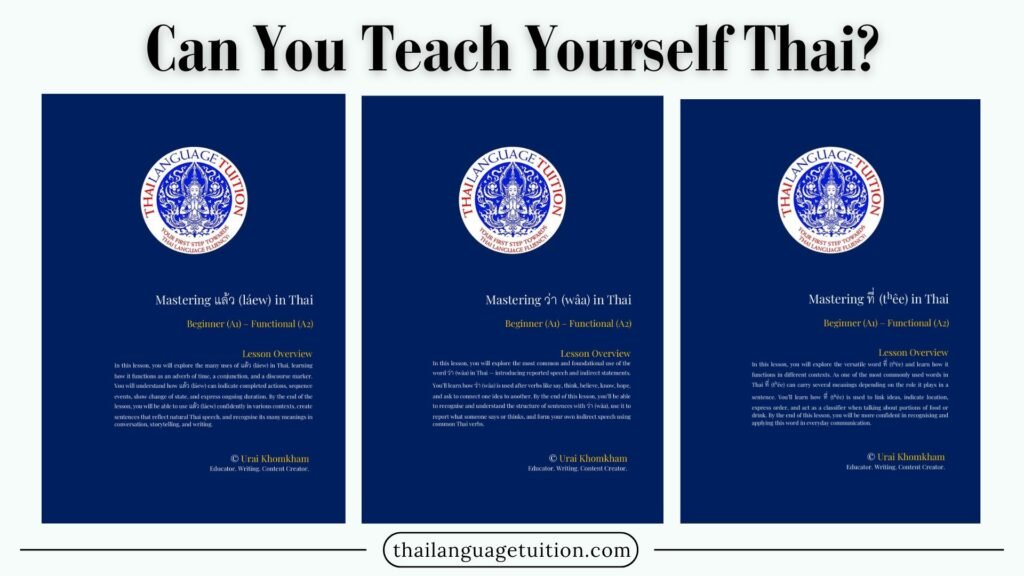
If you want to dive deeper into how to use ว่า (wâa = that), you can grab a PDF copy at my online store 👉 https://shop.uraikhomkham.com/product-details/product/mastering-waa-in-thai
He said that he wanted that car that is red.
เขาบอกว่าเขาอยากได้รถคันนั้นที่สีแดง
khǎo bàwk wâa khǎo awyàak dâi ród khān nán thêe sěe dāeng
In this sentence, we have three instances of ‘that’ in English. The first ‘that’ (conjunction introducing the reported clause) and the second ‘that’ (adjective modifying car).
Now, let’s look at the third ‘that’ in ‘that is red’. Here, ‘that’ functions as a relative pronoun. Its role is to introduce a relative clause that describe the noun ‘car’ more specifically. The relative clause here is: ‘that is red’.
In Thai, this is expressed using relative pronoun ที่ (thêe = that / which). It connects the noun รถคันนั้น (khǎo ród khān nán = that car) with additional information สีแดง (sěe dāeng = red / colour red).
Using the relative pronoun ที่ (thêe = that / which) allows you to add descriptive details to nouns, making your sentences longer, more precise, and more flowing. If you can replace ‘that’ with ‘which’ in English, then ที่ (thêe = that / which) is what you need in Thai.
If you want to dive deeper into how to use ที่ (thêe = that / which), you can also grab a PDF copy at my online store 👉 https://shop.uraikhomkham.com/product-details/product/mastering-thee-in-thai
As you can see from the examples, understanding parts of speech can help you:
- Choose the correct word in Thai
- Avoid confusion when constructing sentences
- Communicate more clearly and accurately
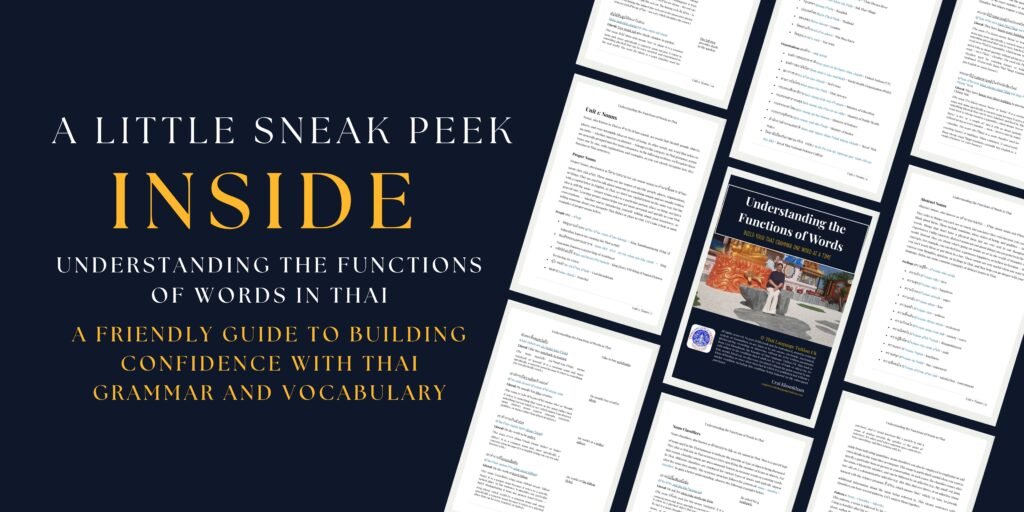
If you found this lesson helpful and you’re starting to see how much easier Thai becomes when you understand the functions of words — then you’ll love my book — Understanding the Functions of Words in Thai.
You can get a paperback copy at my Amazon store or read it instantly on Kindle. If you rather have a PDF copy, you can grab it directly from my online store 👉 https://shop.uraikhomkham.com/product-details/product/understanding-the-functions-of-words-in-thai
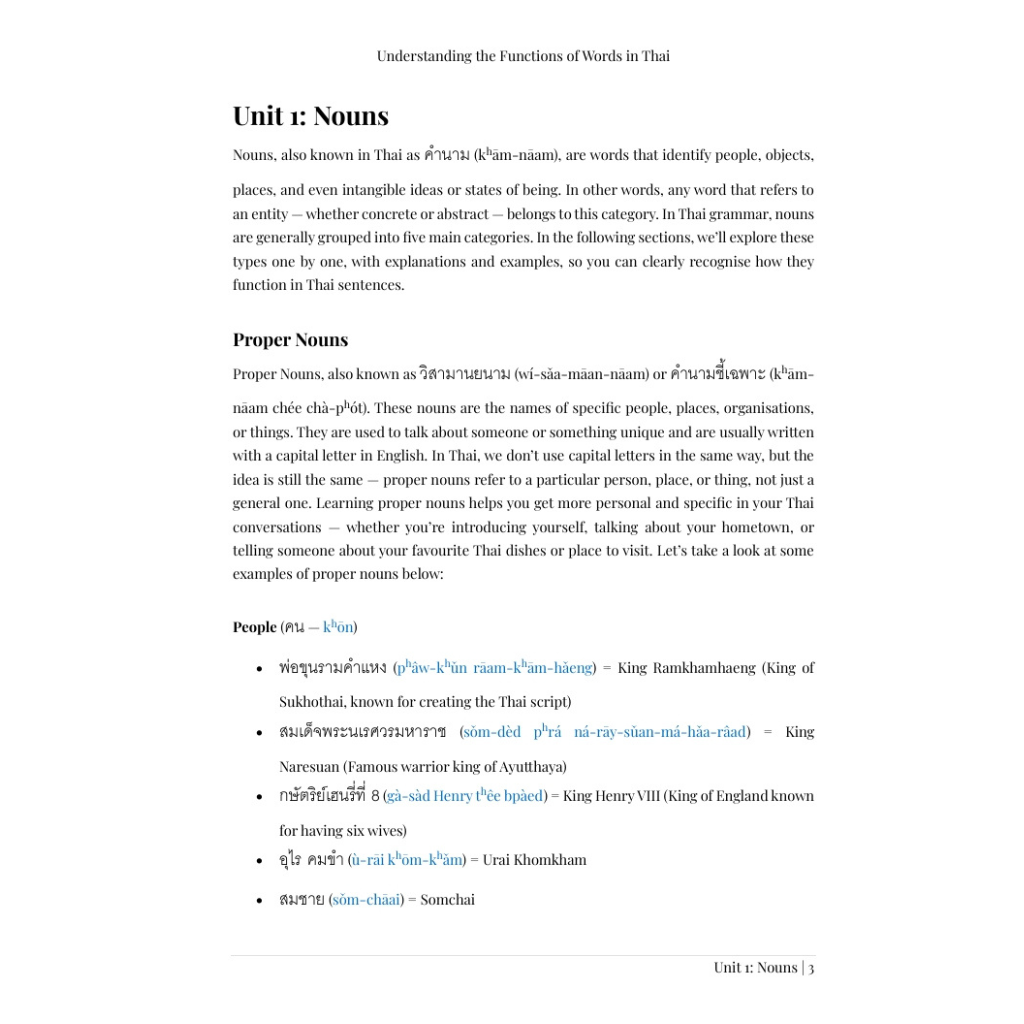
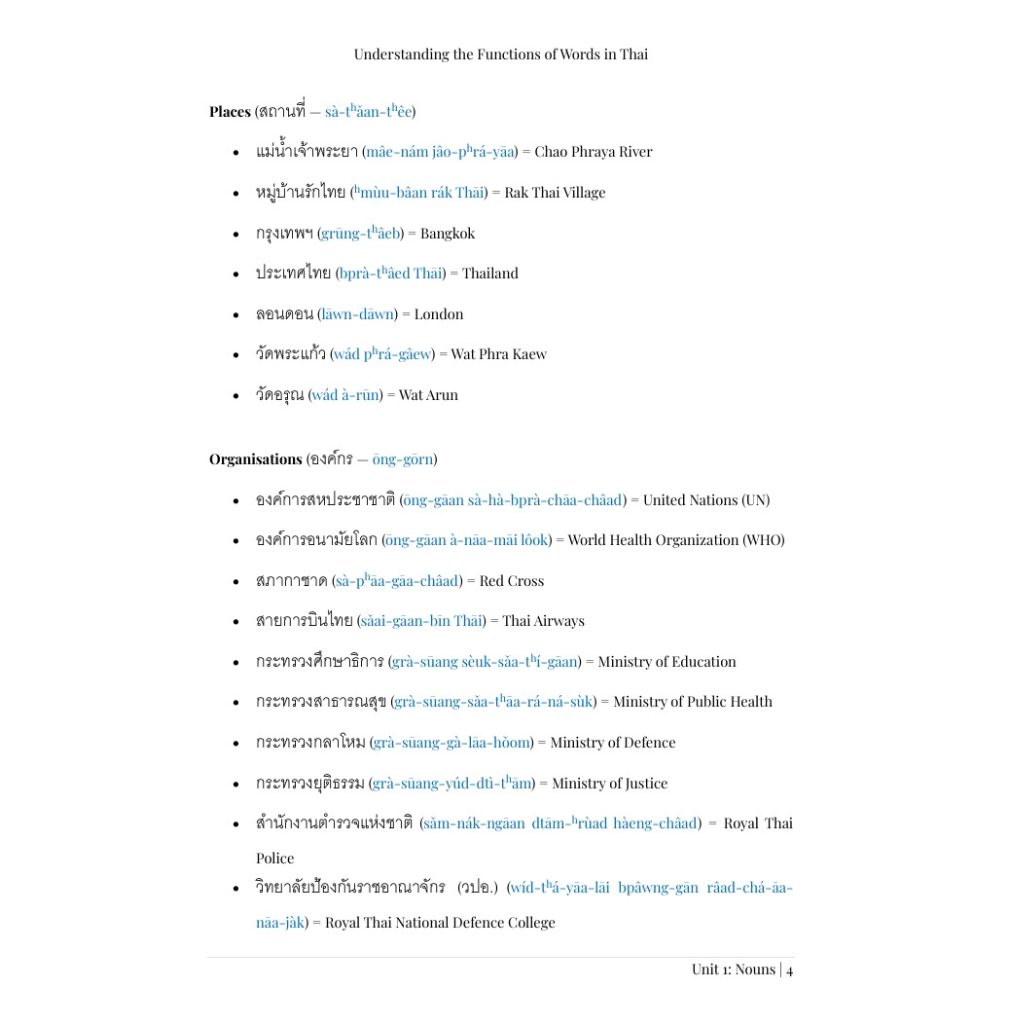
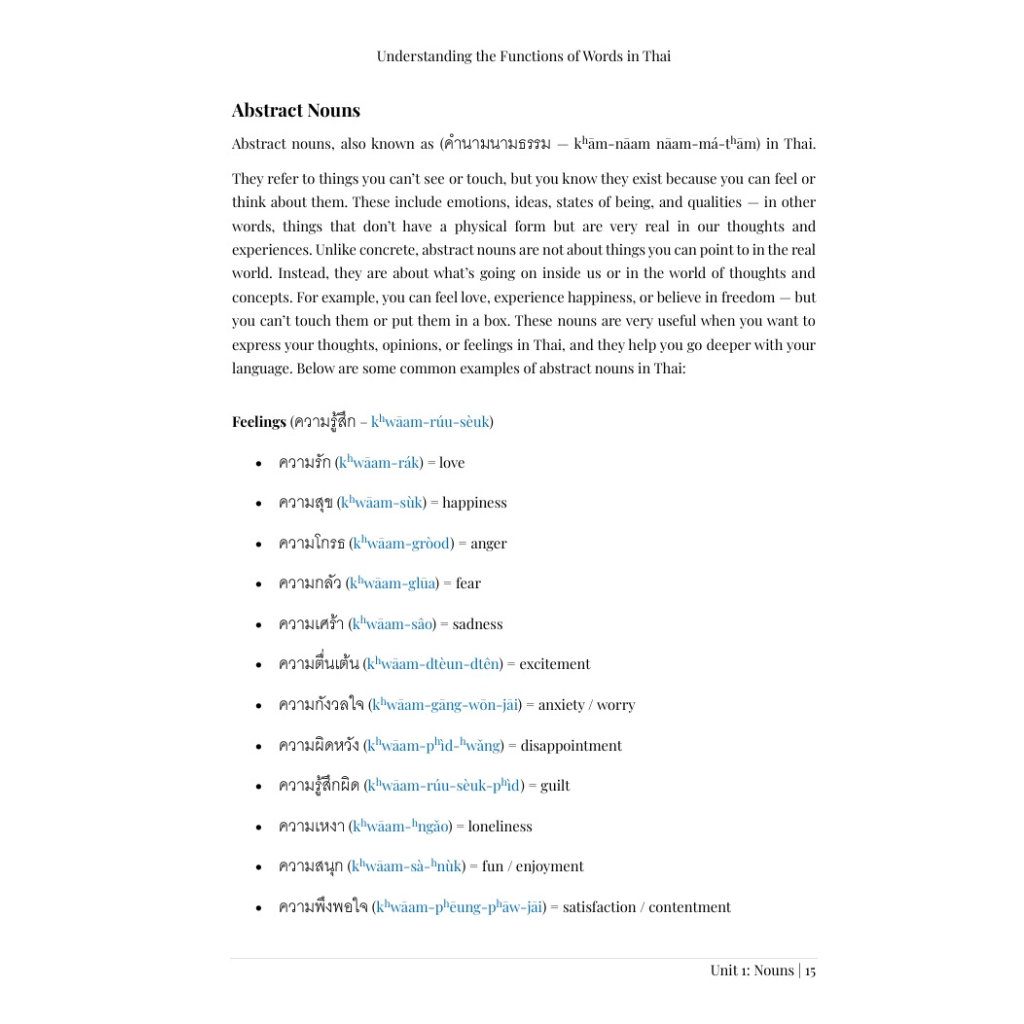
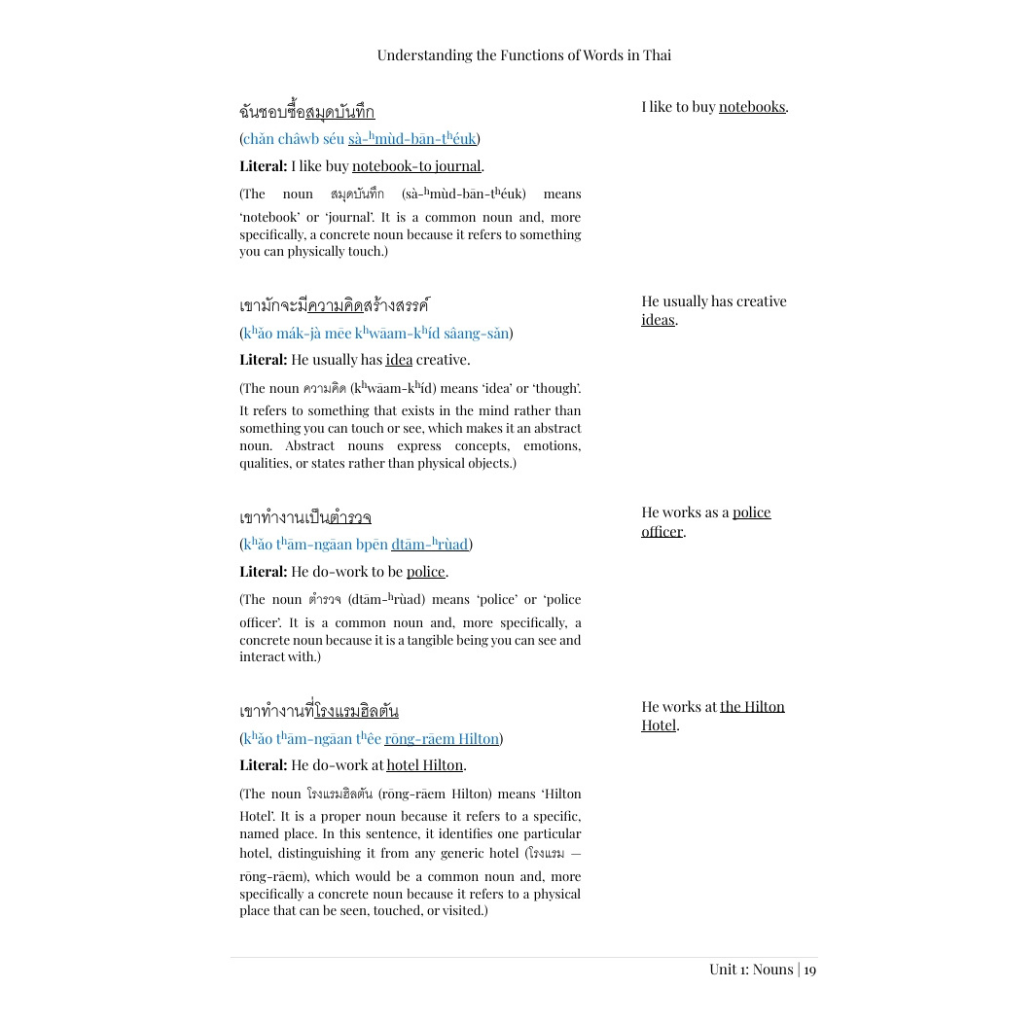
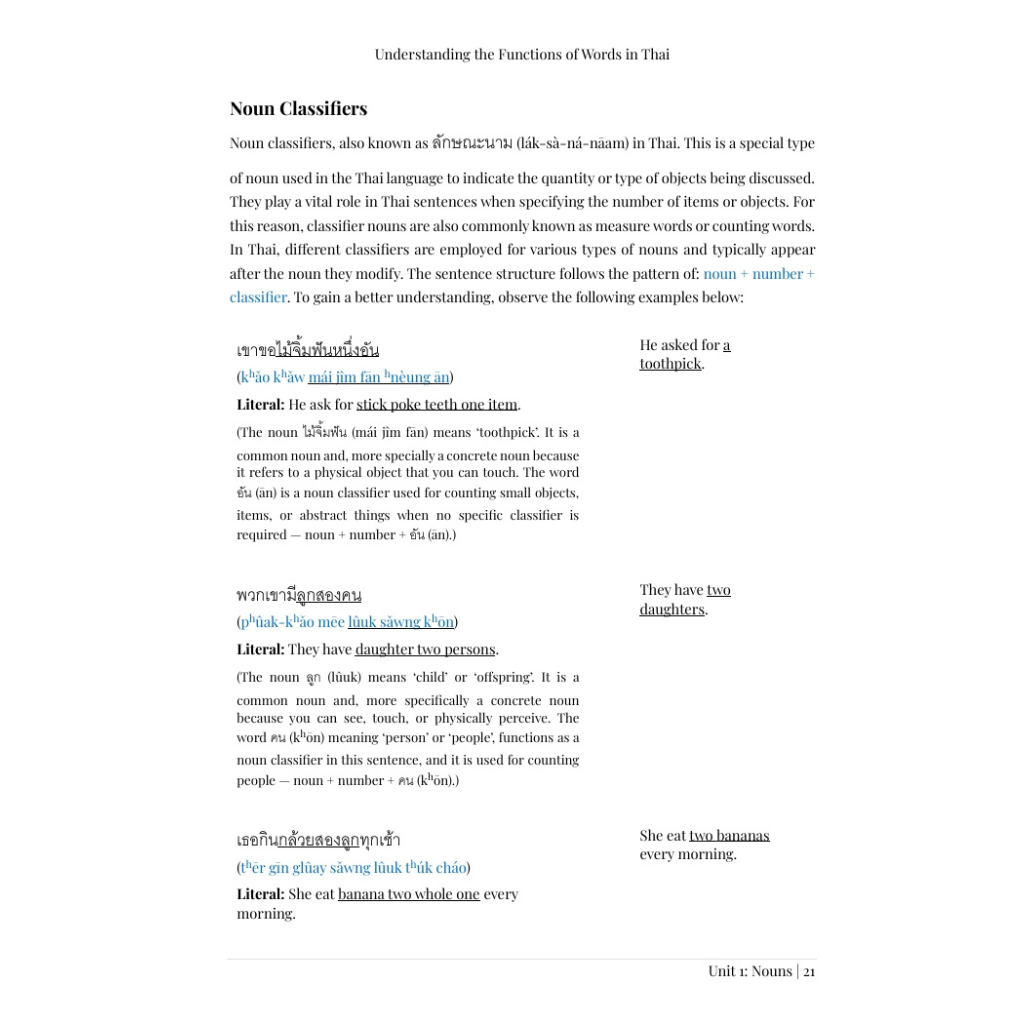
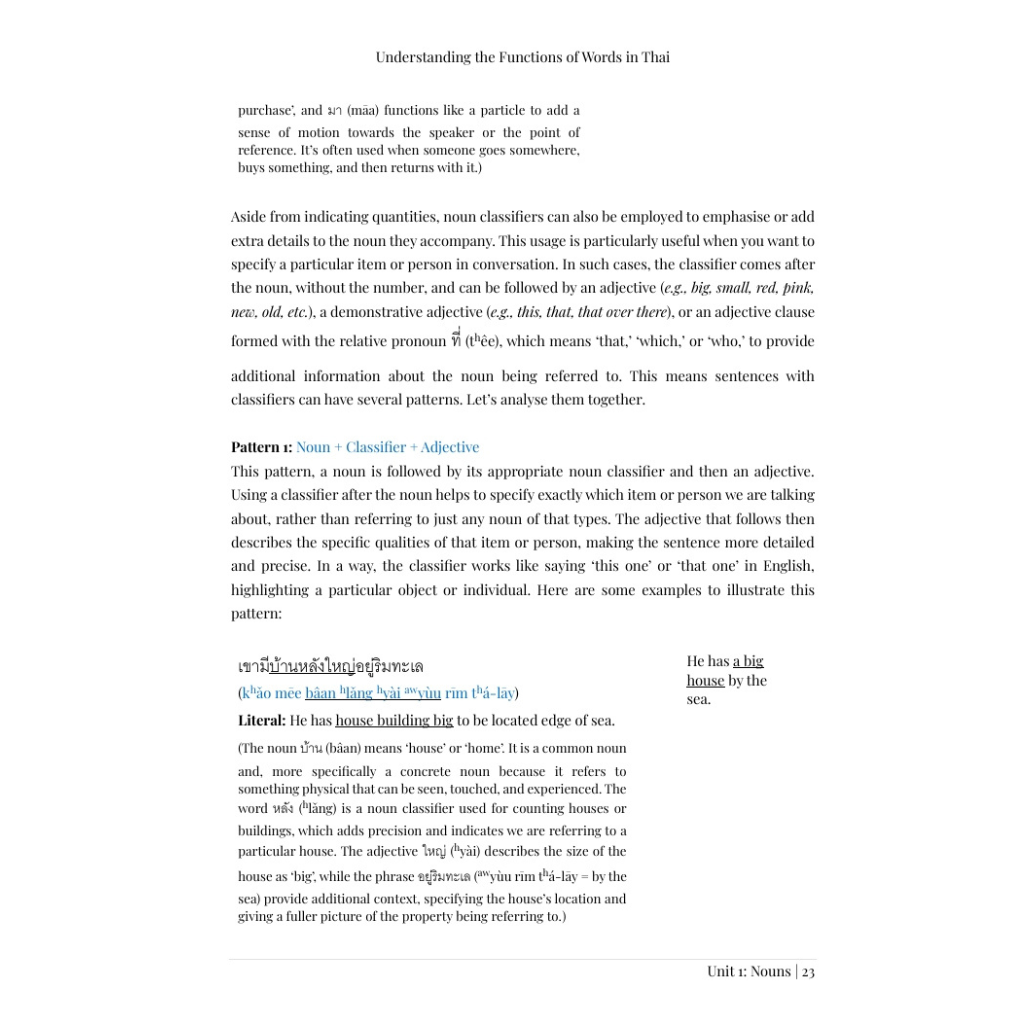
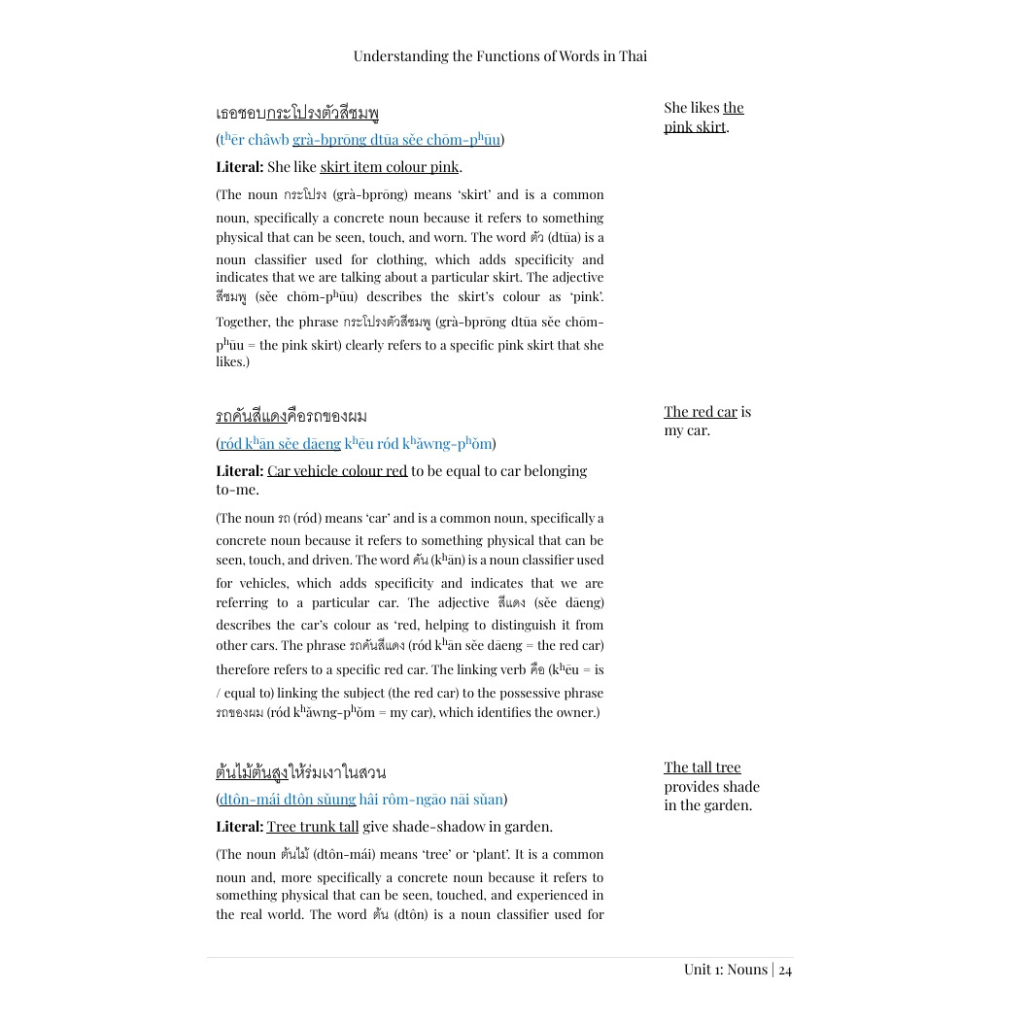
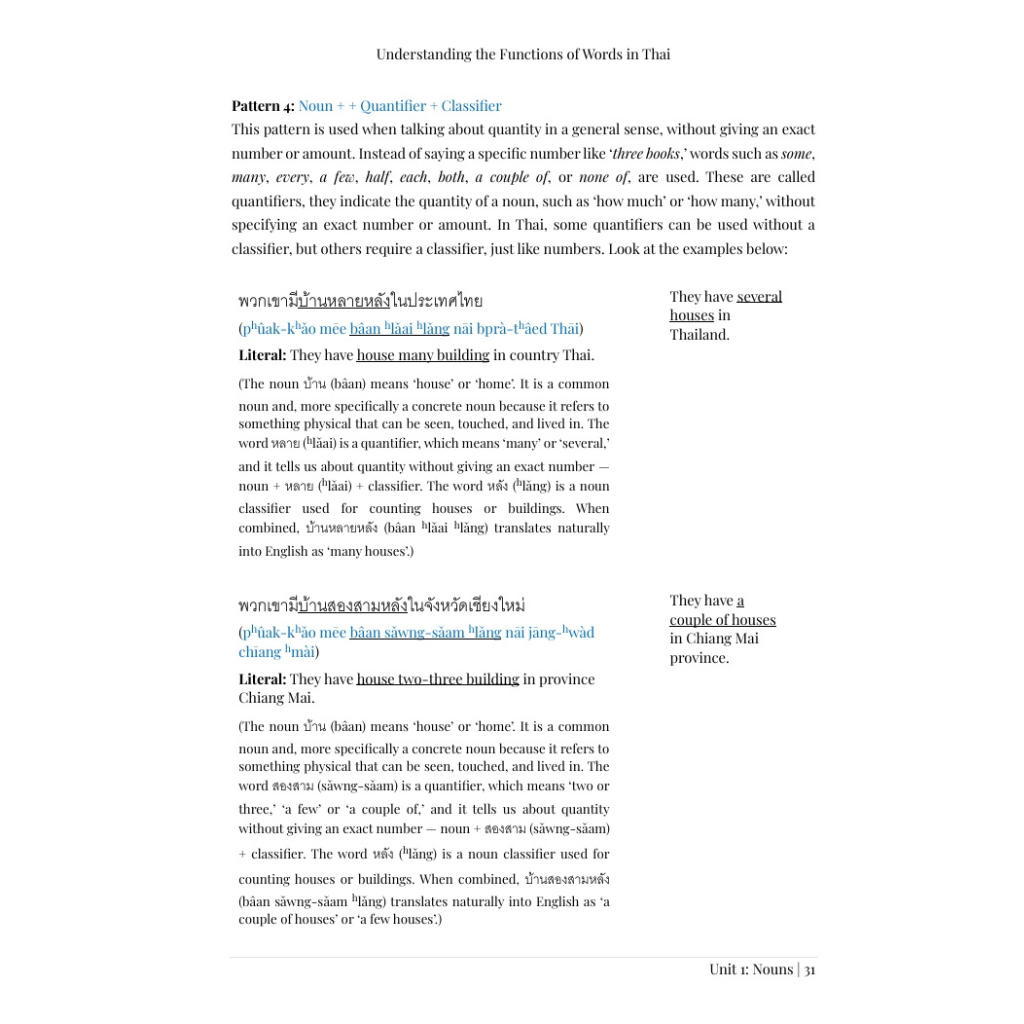
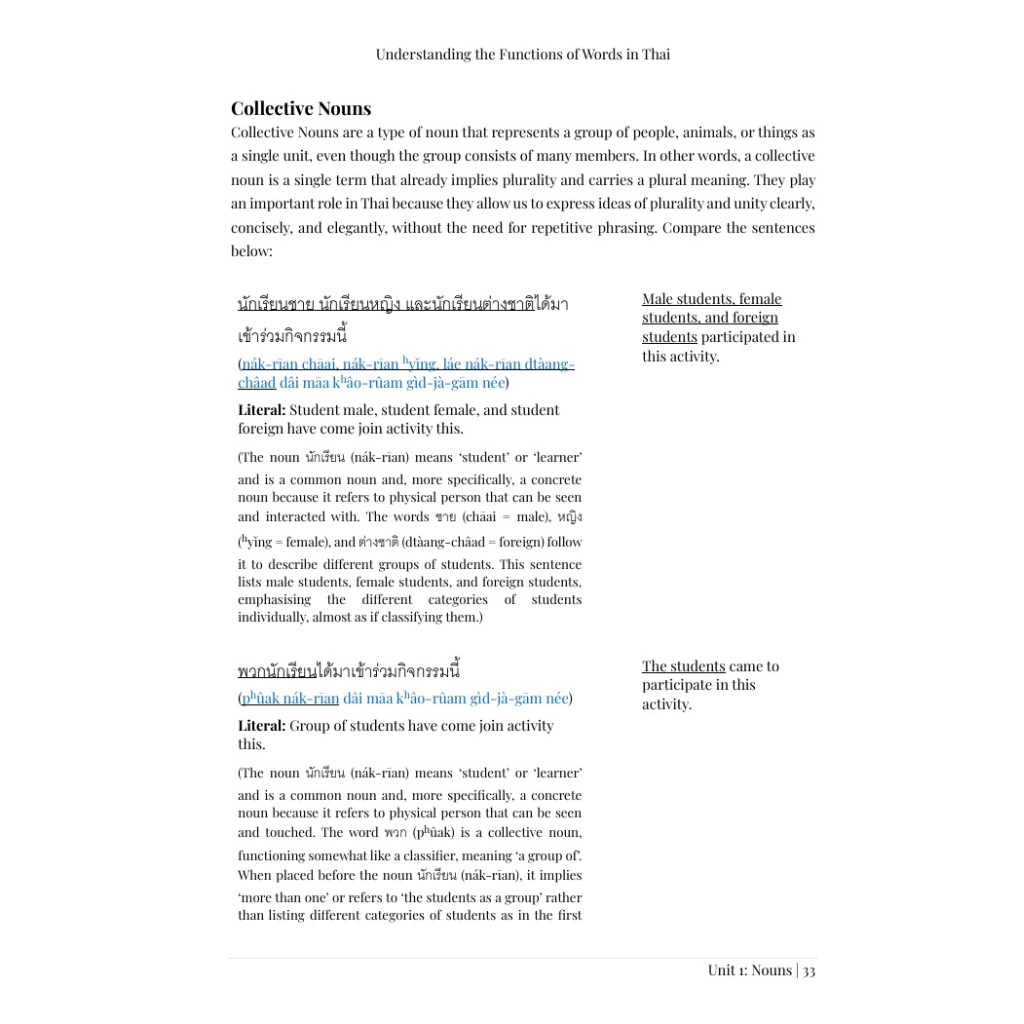
Below is a sneak peek of what’s inside Understanding the Functions of Words in Thai 👇
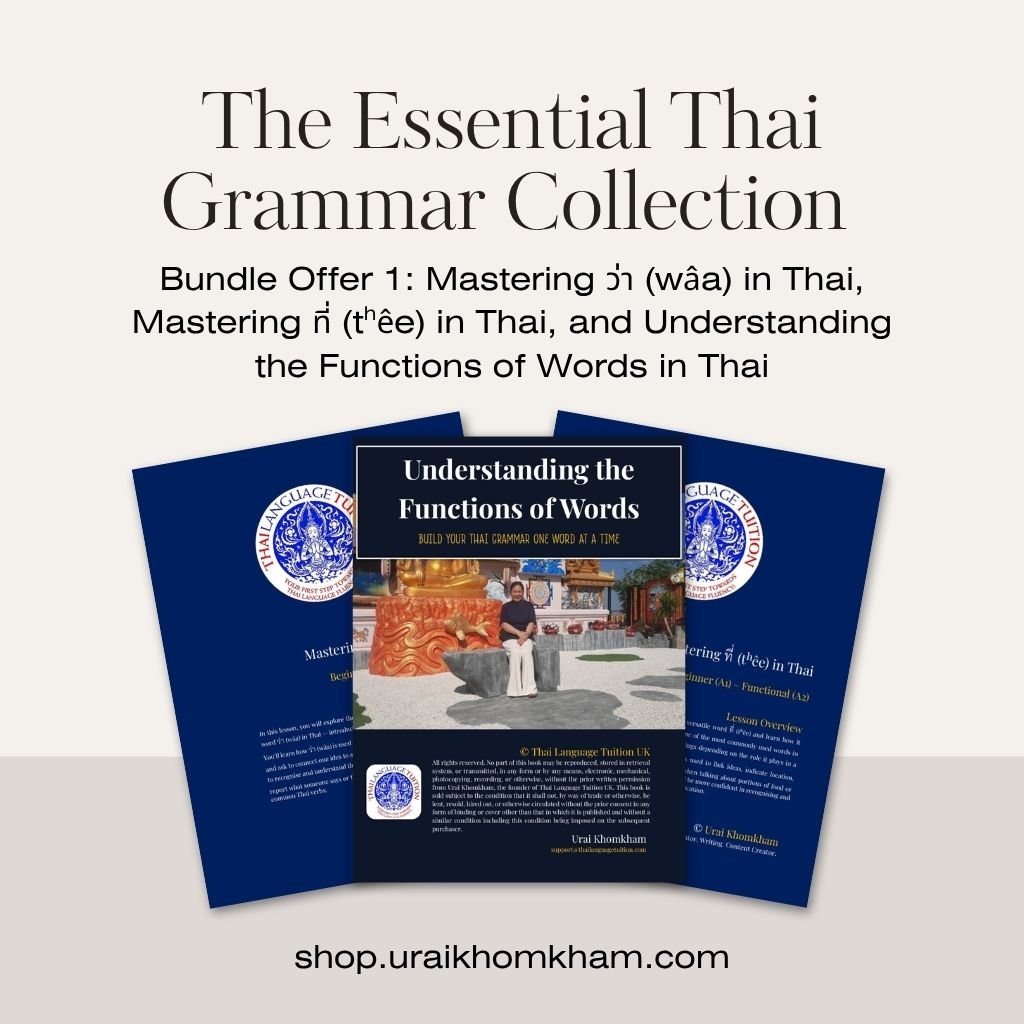
Bundle Offer: If you like the collection of all three — Mastering ว่า (wâa) in Thai, Mastering ที่ (thêe) in Thai, and Understanding the Functions of Words in Thai — I’ve created a special bundle just for you! You’ll save money and build a solid understanding of how Thai sentences really work. Grab your bundle here 👉 https://shop.uraikhomkham.com/product-details/product/the-essential-thai-grammar-collection-bundle-1
I hope you enjoyed this mini lesson. Have a wonderful day — and keep learning, one part of speech at a time.
With all my heart, 💛 — Urai
Founder of Thai Language Tuition UK
You can also find my work at: uraikhomkham.com and shop.uraikhomkham.com
Join My newsletter
About Post Author