If you have ever wandered through a night market (ตลาดกลางคืน — dtà-hlàad glāang-khēun) in Thailand, you may remember the feeling. The narrow street is alive with movement and sound. The air carries the warm scent of grilled pork, sizzling garlic hitting a hot wok, and the gentle steam rising from pots of soup that have been simmering for hours.
Small carts line the roadside, each one glowing softly under hanging lights. Vendors move quickly but calmly, their hands working almost automatically — turning skewers over charcoal, tossing noodles in a wok, ladling broth into waiting bowls.
Some of these stalls have stood in the same place for years, sometimes even decades. The vendors know their regular customers. The customers know exactly what they will order before they even sit down.
And if you sit down with a bowl of noodles or a plate of rice and curry, you are no longer just watching the scene. You become part of it — another person on a small plastic stool, enjoying a meal that has been cooked the same way for years.
I have always loved moments like this. They feel simple, real, and very much a part of everyday life in Thailand.
But for many travellers, there is still a moment of hesitation. I remember a friend once looking at the busy street stalls and asking, “Is it safe?” — and refusing to try anything.
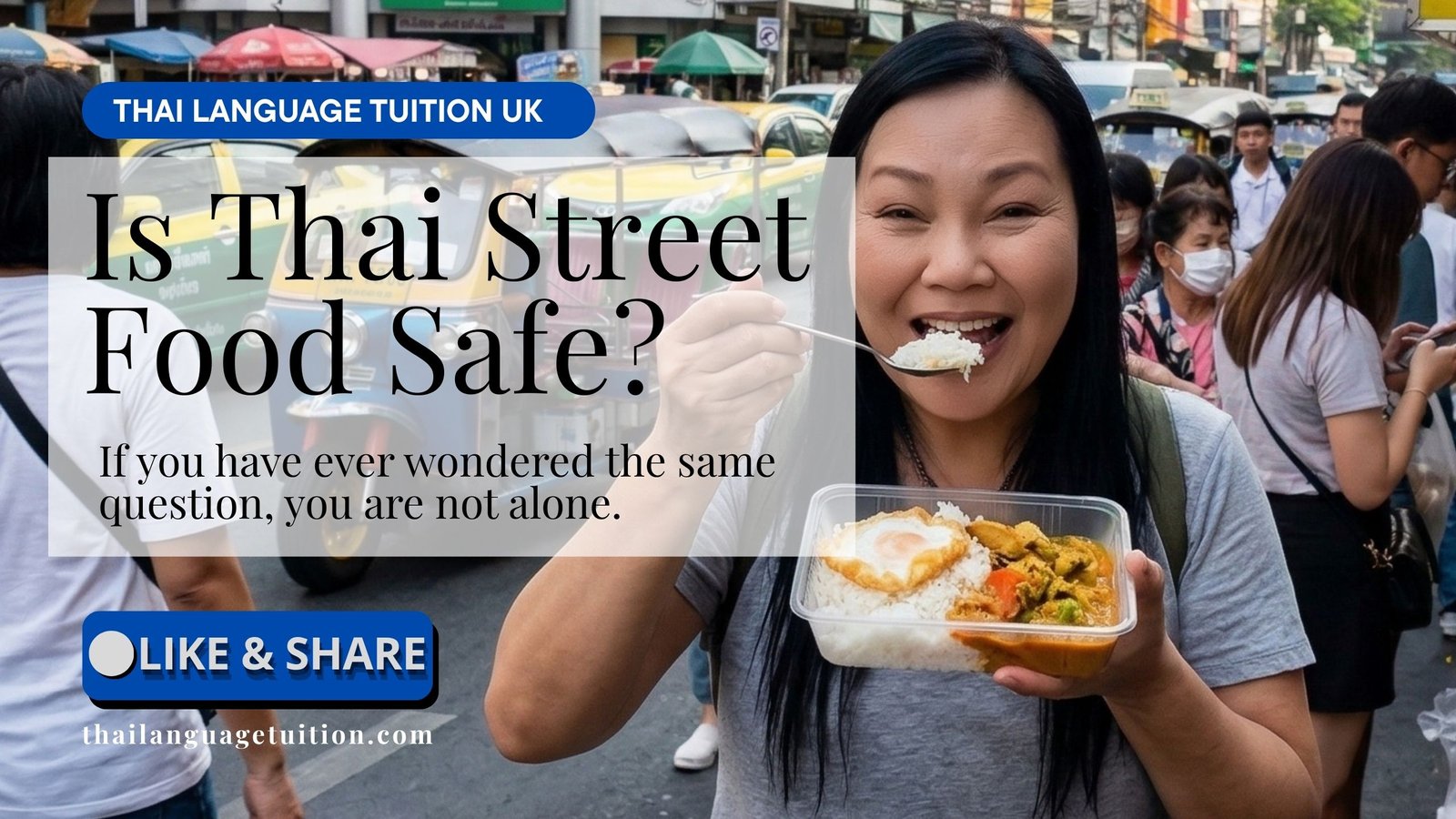
So, if you have ever wondered the same question, you are not alone.
Is Thai street food safe? The answer is: yes — most of the time, it is. But understanding why it is safe and how to choose wisely can make the experience even better.
One of the reasons Thai street food is often safer than people expect is how fresh the food is.
Many street vendors shop at the market early in the morning and prepare ingredients the same day. Because popular stalls sell quickly, food is constantly being cooked and replaced. Dishes are rarely sitting around for hours.
In fact, it is very common to see food prepared right in front of you — grilled, stir-fried, or boiled to order. This constant turnover is one of the reasons locals trust their favourite vendors.
In Thailand, a busy food stall is usually a good sign, so followed the crowd.
If you see a vendor surrounded by Thai customers, it usually means two things:
- The food tastes good.
- People trust the stall.
Locals tend to return to vendors they know are reliable. A long queue in front of a small street cart is often the best recommendation you can get.
Just like anywhere in the world, some vendors are more careful than others.
When choosing where to eat, it is always a good idea to observe a few simple things:
- Are ingredients stored properly?
- Is the food cooked fresh?
- Are utensils reasonably clean?
- Does the stall look organised?
Most vendors take pride in their food and their reputation. Street food is often a family business passed down over time, and regular customers are important.
For many travellers, the biggest issue is not safety — it is adjustment.
Thai food often uses fresh herbs, chillies, fermented sauces, and ingredients that may be unfamiliar to visitors. Even perfectly clean food can sometimes upset a stomach that is not used to these flavours.
This is why it is usually best to start slowly, drink plenty of bottled water (tap water is not recommended for drinking), and allow your body time to adjust to the new flavours and ingredients.
Street food is not just a convenient way to eat in Thailand — it is a central part of daily life.
Officer workers grab lunch from their favourite stalls. Families stop by local markets on the way home. Late at night, street vendors feed students, taxi drivers, and night-shift workers.
For many Thai people, street food is simply normal food. It is affordable, fresh, and deeply connected to local communities.
So, it is a huge part of Thai culture.
If you visit Thailand and avoid street food entirely, you may miss one of the most authentic parts of everyday life. Some of the most memorable meals in Thailand happen on plastic stools beside a small cart, with a bowl of noodles prepared in minutes by someone who has been cooking the same dish for twenty years.
It may look simple, but often those small roadside stalls are where the real taste of Thailand lives.
About Post Author