
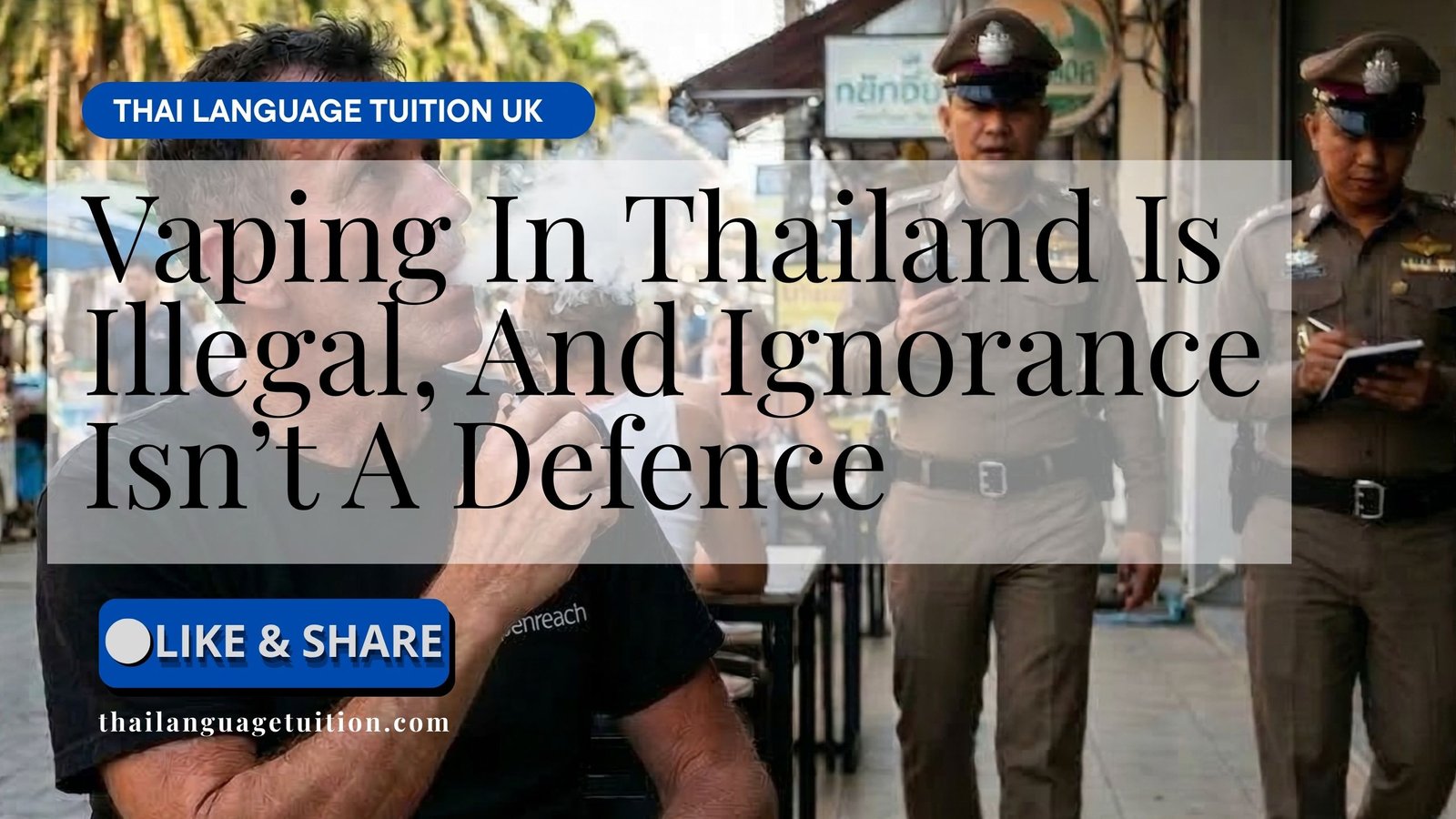
The other day, one of my former students came to visit me and share a story about something that happened to him in Thailand. He was vaping in public, not thinking much of it. Let’s face it, in many countries, vaping is quite common and legal, so he didn’t realise that vaping is actually illegal (ผิดกฎหมาย — phìd gòd-hmǎai)in Thailand.
After a short while, the police approached him and asked him about the vape. They then took him to the police station. Luckily for him, his Thai wife was with him. She spoke to the police and explained the situation. As it turned out, she came from the same village as one of the officers. Because of that connection, and because he genuinely didn’t know about the law, they decided to give him a warning instead of pressing charges.
And perhaps this goes back to something we talked about before in Why Thailand Doesn’t Work the Way You Expect — the idea that people often come before process.
In Thailand, relationships can matter more than visitors expect. Social connections, shared backgrounds, or even something as simple as coming from the same village can sometimes change the tone of a situation.
This doesn’t mean the law disappears, of course. But it does reflect something deeper about Thai culture — the important of relationships and personal connections between people.
If you have spent time in Thailand, you may have noticed this already. Things often move through people rather than systems. A friendly conversation, a shared hometown, or a mutual connection can soften situations that might otherwise became more serious.
In my student’s case, that small connection made the difference between a warning and something much more complicated.
And it is another reminder of something I often write about when it comes to Thailand: understanding the culture can sometimes be just as important as understanding the rules.
So, if you’re trying to quit smoking while in Thailand, consider legal options like nicotine patches (แผ่นแปะนิโคติน — phàen bpèt ní-khōo-dtīn)or gum (หมากฝรั่งนิโคติน — hmàak-fà-hràng ní-khōo-dtīn). And always check the latest regulations — the rules are enforced seriously.
Why the Law Exists
The government has cited health concerns and the growing use of vaping among young people as reasons for the ban. As a result, the regulations are strict and the law is taken seriously.
Of course, some people notice the contradictions — for example, cannabis has recently been legalised for medical purpose, or traditional cigarettes are widely available, and the main cigarettes manufacturer in Thailand is state-owned. Some argue that vaping is banned because the government profits from cigarettes, which raises questions about consistency and fairness.
And perhaps, this is another example of how Thailand doesn’t always work the way visitors expect. Rules don’t always reflect what seems “fair” from a foreign perspective — they reflect cultural values and what Thai society considers important.
But regardless of the debates, the law regarding vaping has been in place since 2014.
In 2014, the Thai government introduced regulations that made the import of electronic cigarettes and vaping devices illegal. This means that bringing a vape into Thailand — even if it is just in your luggage for personal use — can technically be considered importing a prohibited item.
Under Thai import laws, certain goods are not allowed to enter the country at all. E-cigarettes and vaping devices fall into this category. Because of that, bringing them into the country call fall under Thailand’s customs laws. In theory, illegal importation can carry a penalty of up to 10 years prison and a fine of up to five times the value of the goods.
Selling or distributing e-cigarettes carries its own penalties as well. Those caught selling them may face up to three years in prison and fines that can reach around 600,000 bath.
And if someone is simply caught vaping in a place where smoking is prohibited, there can also be a fine of up to 5,000 baht or/and jail time.
In reality, what often happens in smaller cases is that the device is confiscated and the person may be taken to the police station and fined. But legally speaking, the penalties written in the law are much heavier.
Which is why it’s always better to know the rules before travelling. Something that seem quite harmless — like carrying a vape in your bag — can become a legal issue in Thailand.
⚠️ Bottom Line: Don’t risk it. Even if it seems harmless, vaping in Thailand is illegal, and ignorance isn’t a defence.
About Post Author