
Adverb of Time: อีกสักครู่ (èek sàk-khrûu)
Meaning: in a little while / in a moment / shortly / just a moment longer
In this Thai lesson, we learn how to use the adverb of time อีกสักครู่ (èek sàk-khrûu), which means ‘in a little while,’ ‘in a moment,’ ‘shortly,’ or ‘just a moment longer.’ Thai speakers use this expression to indicate that something will happen after a brief wait, making it a common and polite way to talk about the near future.
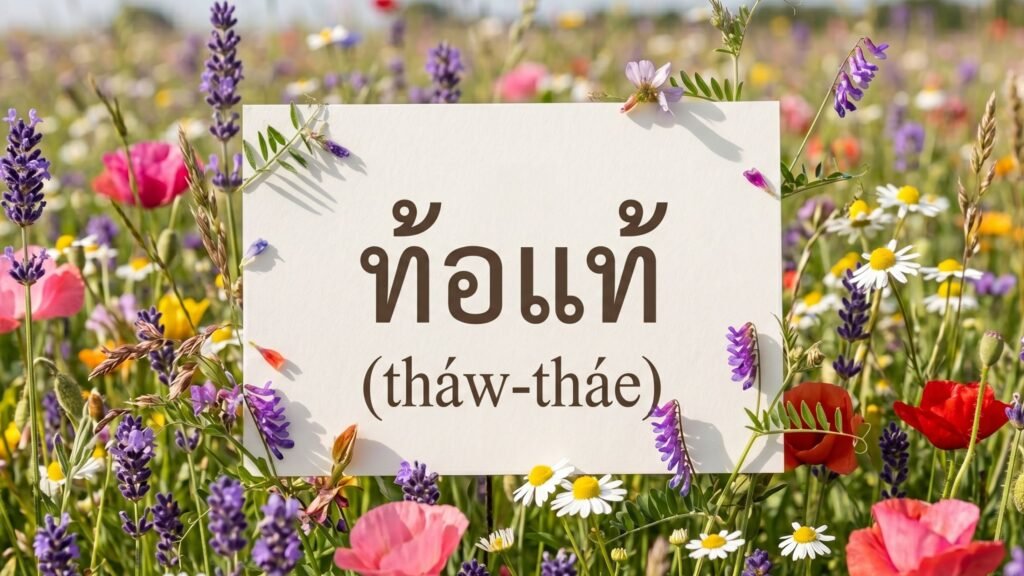
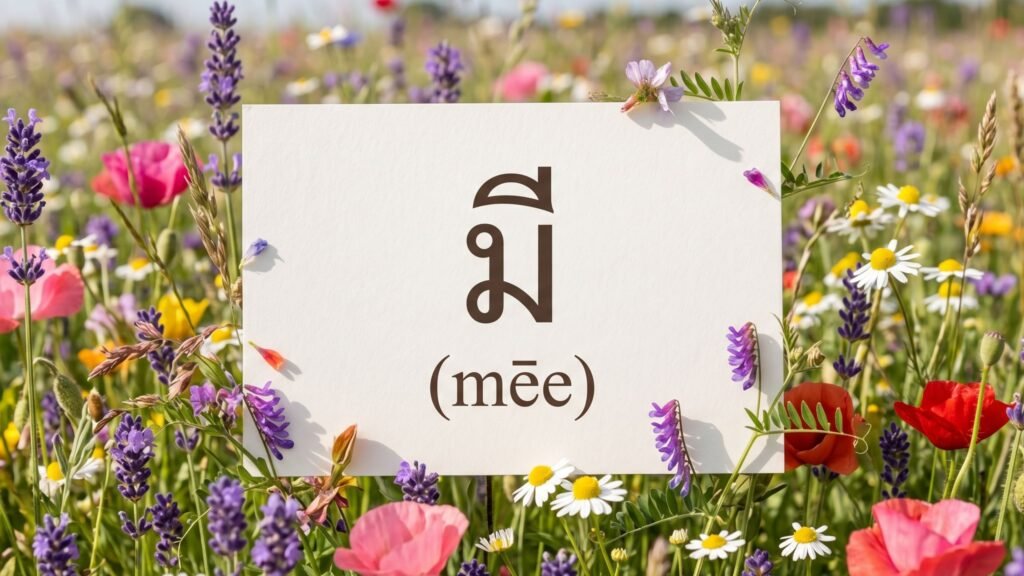
It made up of two words:
- อีก (èek) = another
- สักครู่ (sàk-khrûu) = a moment / a short moment
Together, อีกสักครู่ (èek sàk-khrûu) is literally ‘another short moment.’ Rather than referring to a specific amount of time, it indicates that something will happen after a brief wait. In English, it is commonly translated to ‘in a little while,’ ‘shortly,’ or ‘in a moment.’
For examples (ตัวอย่างเช่น — dtūa-awyàang chên)
อีกสักครู่ผมจะไปส่งเพื่อนที่สนามบิน
èek sàk-khrûu, phǒm jà bpāi sòng phêuan thêe sà-hnǎam-bīn
Literal: Another short moment, I will go drop off friend at airport.
In a little while, I’m going to drop a friend off at the airport.
The helping verb จะ (jà) means ‘will’ or ‘going to.’ It is used mainly to talk about the future, intentions, plans, and things that are expected to happen — subject + จะ (jà) + verb.
ผมขอเวลาอีกสักครู่ ผมใกล้จะเสร็จแล้ว
phǒm khǎw wāy-lāa èek sàk-khrûu, phǒm glâi jà sèd láew
Literal: I ask for time another short moment, I nearly will be finish already.
Please give me just a moment longer; I’m almost finished.
The verb ขอ (khǎw) means ‘to ask for,’ ‘to request,’ or ‘to seek permission.’ Whenever you use this verb, you are asking someone for something — whether it is an object, an action, permission, or a favour.
อีกสักครู่ทุกอย่างก็จะเรียบร้อย
èek sàk-khrûu thúk-awyàang gâw jà rîab-róy
Literal: Another short moment everything also will be in good order.
Everything will be sorted out shortly.
The helping verb phrase ก็จะ (gâw jà) is often used to link the future action to a previous idea, showing a logical consequence, expected result, or natural progression. In English, it is usually translated simply as ‘will,’ although depending on the context it may be understood as ‘will then,’ ‘will therefore,’ or ‘will eventually.’ The particle ก็ (gâw) makes the connection between the two ideas smoother and more natural in Thai — clause 1 + ก็จะ (gâw jà) + verb.
อีกสักครู่คุณหมอจะเรียกชื่อคุณ
èek sàk-khrûu khūn hmǎw jà rîak chêu khūn
Literal: Another short moment, Mr. doctor will call name you.
The doctor will call your name in a moment.
When word คุณ (khūn) is placed before a person’s name or job title, it is used as a polite title meaning ‘Mr.,’ ‘Mrs.,’ ‘Ms.’ It shows respect and politeness when addressing or referring to someone — คุณ (khūn) + first name / job title.
Homework (การบ้าน — gāan-bâan)
Practise putting your newly learned Thai word into a sentence by translating the following sentences below.
- I will send you more details shortly.
- The manager will come to see you shortly.
- If you wait for a little longer, the rain will probably stop.
- Please wait a little longer. A member of staff will come to help you shortly.
- The train will arrive at the platform shortly.
About Post Author