

A Quick Guide to Using บน (bōn) in Thai
In Thai, the word บน (bōn) means ‘on’. It is a preposition of place used when something is on top of something else, describing a physical position or location.
In Thai, the word บน (bōn) means ‘on’. It is a preposition of place used when something is on top of something else, describing a physical position or location.

In this Thai lesson, we learn how to use the verb คาใจ (khāa jāi). It means to remain in someone’s mind or heart because it has not been resolved or explained. It describes a feeling of lingering doubt, suspicion, or uneasiness about something.

Many people arrive in Thailand with excitement, curiosity, and sometimes a little bit of confidence. They have read about the beautiful beaches, the incredible food, and the warmth of Thai hospitality. Some have visited before on holiday. Others arrive for work, retirement, or simply a new adventure.
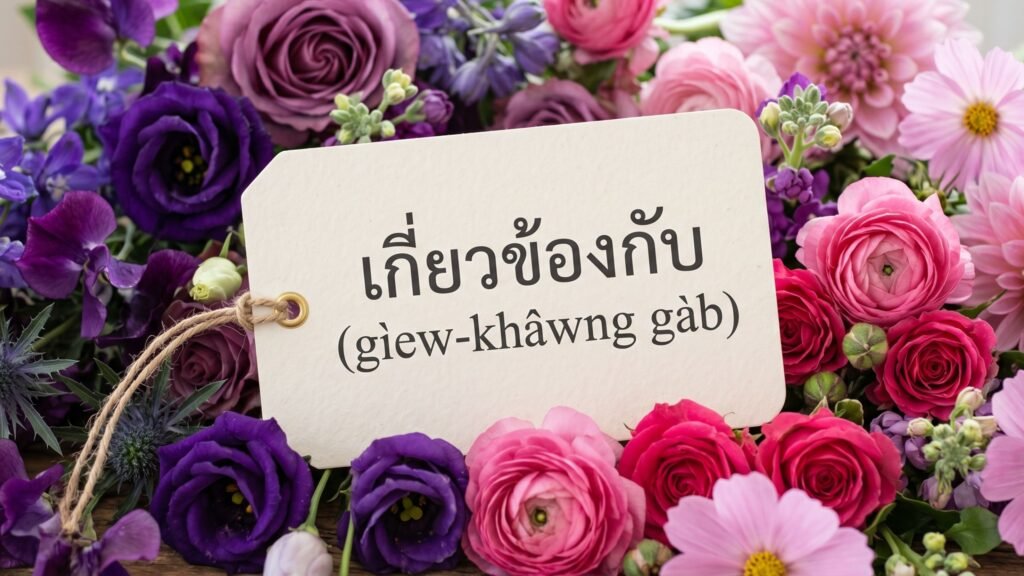
In this Thai lesson, we learn how to use the verb เกี่ยวข้องกับ (gìew-khâwng gàb), which means ‘to be relevant to,’ ‘to be related to,’ to be connected with,’ or ‘to be involved in’ something. It is used when a person, event, or thing has some kind of relationship or connection with another situation, topic, or activity.
Daily Thai Confidence — Using เกี่ยวข้องกับ (gìew-khâwng gàb) Read More »

If you have ever wandered through a night market in Thailand, you may remember the feeling. The narrow street is alive with movement and sound. The air carries the warm scent of grilled pork, sizzling garlic hitting a hot wok, and the gentle steam rising from pots of soup that have been simmering for hours.
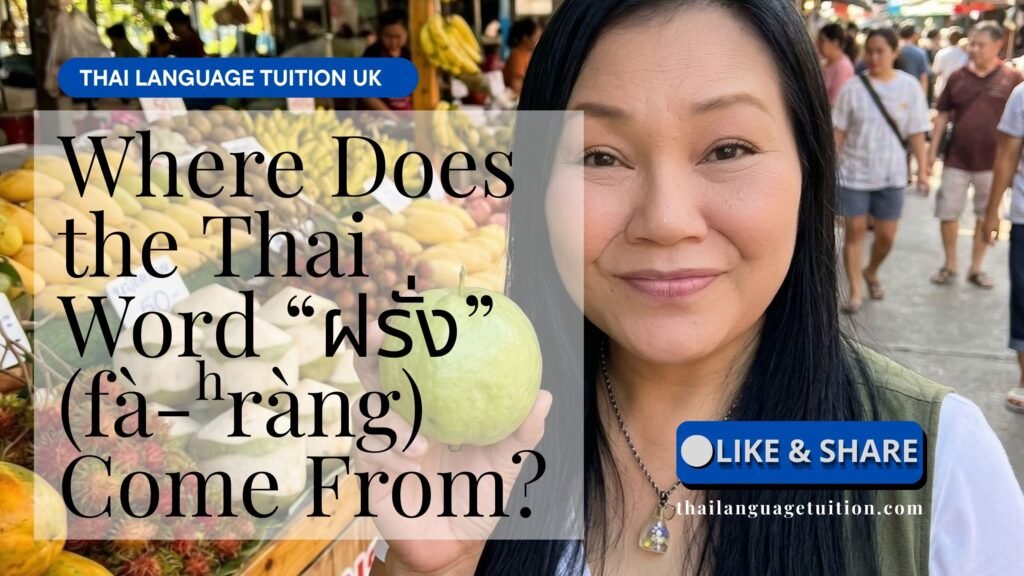
If you spend any time in Thailand, sooner or later you will hear the word ฝรั่ง (fà-hràng). Sometimes it is used casually in conversation. Sometimes it is used to describe a person. And sometimes it appears in surprising places — like in the names of food.
Where Does the Thai Word “ฝรั่ง” (fà-hràng) Come From? Read More »

And when love leads you there, Thailand becomes more than just a destination. It is a culture to be understood, a rhythm of life to be appreciated, and a world that asks for patience, curiosity, and respect.
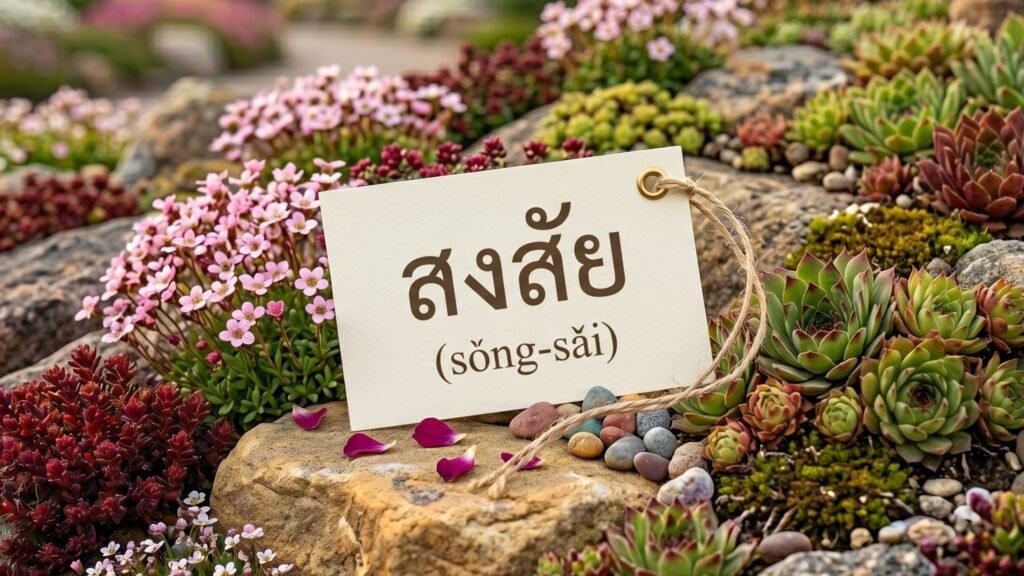
In this Thai lesson, we learn how to use the verb สงสัย (sǒng-sǎi), which means ‘to wonder,’ ‘to doubt,’ or ‘to suspect’. It expresses a feeling of uncertainty when someone is not sure about something, is curious about an explanation, or thinks something may be true but lacks confirmation.

People fall in love with Thailand because of how it feels. It’s the warmth of the people. It’s the smile from a stranger that doesn’t feel forced. It’s the street food vendor who remember your usual order.
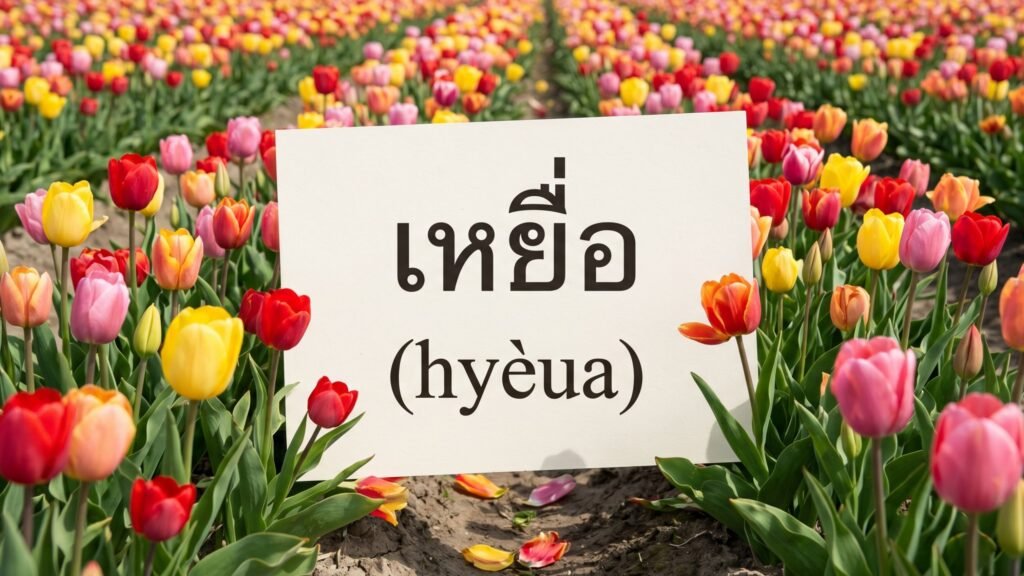
In this Thai lesson, we learn how to use the noun เหยื่อ (hyèua), which means ‘a victim’ or ‘a prey’. It refers to someone or something that suffers harm, either physically (like an animal being hunted) or emotionally or socially (like someone harmed by crime, deception, or abuse).
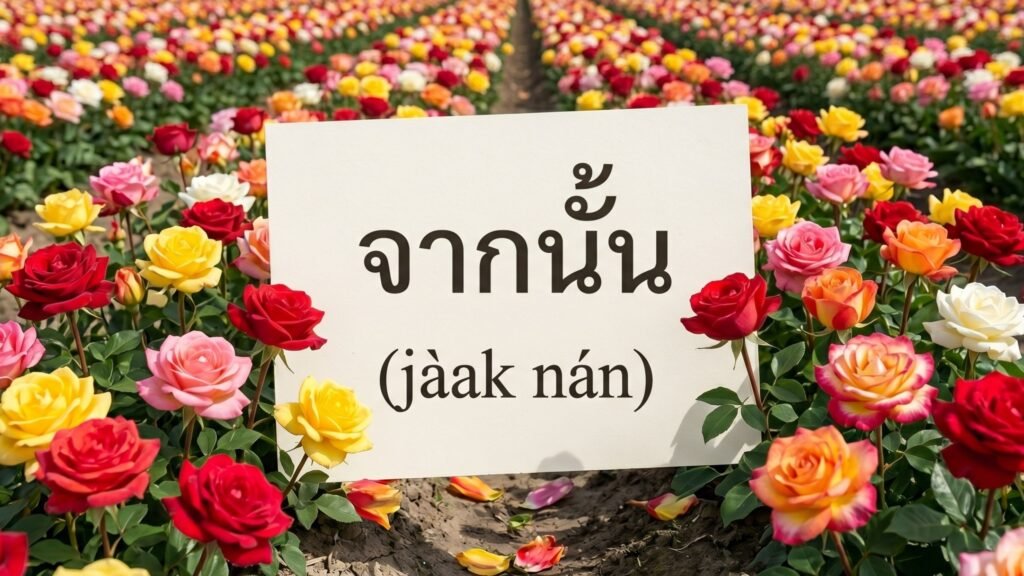
In this Thai lesson, we learn how to use the adverb จากนั้น (jàak nán), which means ‘after that,’ ‘then,’ or ‘afterwards’. It is a time-sequence adverb used to introduce the next event in a sequence of actions.
Daily Thai Confidence — Using จากนั้น (jàak nán) Read More »