Free Thai Learning Resources Corner

Welcome to the “Free Resources Corner,” where visitors can dive into a selection of complimentary language learning resources. Whether you’re curious about my teaching approach, looking for a taste of what I offer, or simply seeking additional learning materials, this section has something for everyone. From vocabulary lists and grammar guides to interactive quizzes and language tips, explore these free resources to kickstart your Thai language learning journey. Enjoy sampling my offerings, and when you’re ready to take your Thai language learning further, consider joining my private tuition programme, weekly group classes, or blog membership for exclusive access to even more tools and support.

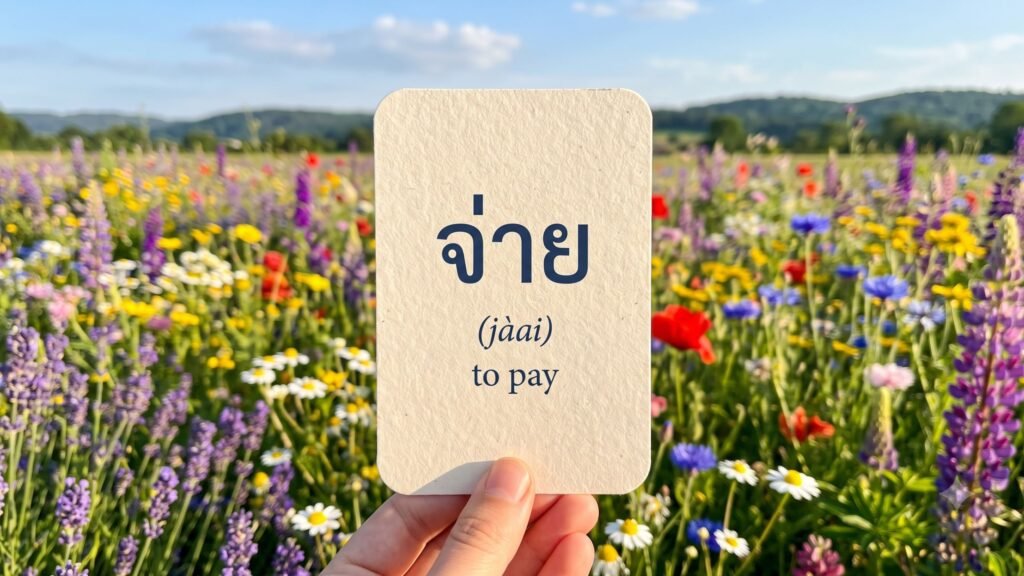
Daily Thai Confidence — Using จ่าย (jàai)

In this Thai lesson, we learn how to use the verb จ่าย (jàai), which means ‘to pay.’ It focuses on the person making the payment. It describes the action of giving money to another person, business, or organisation in exchange for goods, services, or to settle a bill, debt, or fee.

Daily Thai Confidence — Using จ่าย (jàai) Read More »

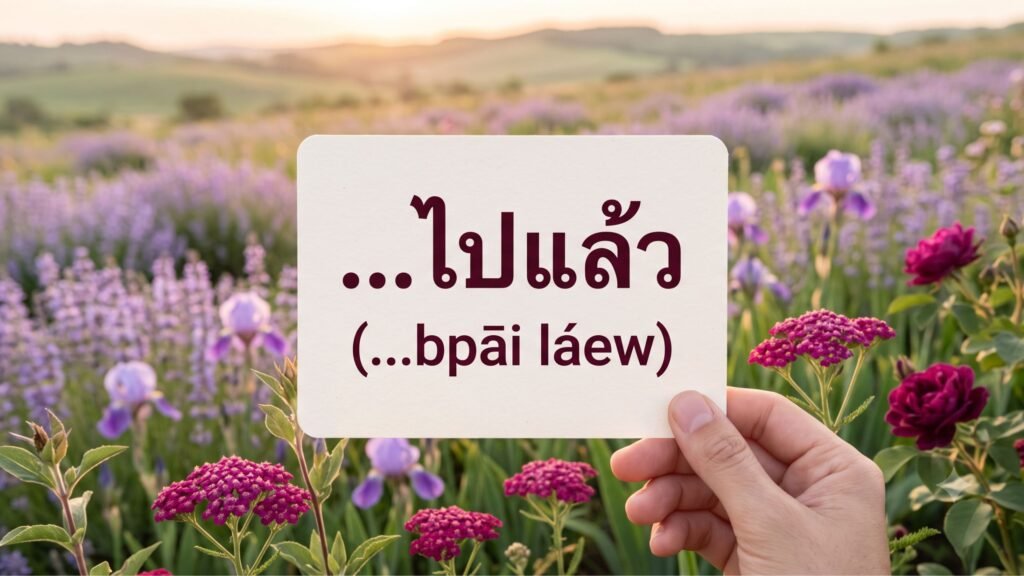
Daily Thai Confidence — Using ไปแล้ว (…bpāi láew)

In this Thai lesson, we learn how to use the common Thai pattern …ไปแล้ว (…bpāi láew), which is often translated as ‘have already…’ or ‘already did…’ Although ไป (bpāi) normally means ‘to go,’ it does not have its literal meaning in this pattern. Instead, it functions as a directional complement (also called a completive complement) that follows another verb. Together, with แล้ว (láew = already), it shows that an action has been fully completed and that its result or effect now exists.

Daily Thai Confidence — Using ไปแล้ว (…bpāi láew) Read More »

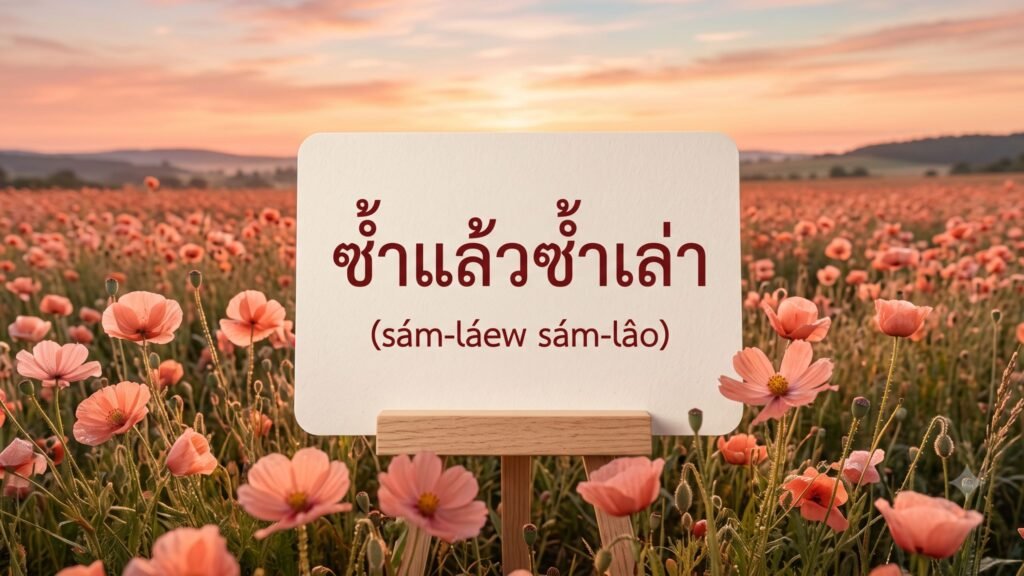
Daily Thai Confidence — Using ซ้ำแล้วซ้ำเล่า (sám-láew sám-lâo)

In this Thai lesson, we learn how to use the idiomatic expression ซ้ำแล้วซ้ำเล่า (sám-láew sám-lâo), which means ‘again and again,’ ‘over and over,’ ‘repeatedly,’ or ‘time after time.’ It is used when an action happens repeatedly, often many times and sometimes with a feeling of frustration, emphasis, or persistence.

Daily Thai Confidence — Using ซ้ำแล้วซ้ำเล่า (sám-láew sám-lâo) Read More »

Daily Thai Confidence — Using เหนื่อย (hnèuay)

In this Thai lesson, we learn how to use the adjective เหนื่อย (hnèuay), which means ‘is tired,’ ‘is exhausted,’ or ‘is fatigued.’ It describes a person’s physical or mental state after using energy, working hard, exercising, or dealing with difficulties.

Daily Thai Confidence — Using เหนื่อย (hnèuay) Read More »

Daily Thai Confidence — Using คล่อง (khlâwng)

In this Thai lesson, we learn how to use the word คล่อง (khlâwng), which can be translated to ‘fluently,’ ‘proficiently,’ ‘skilfully,’ or ‘efficiently.’ It is used to describe someone who can do something easily, smoothly, confidently, and without hesitation. It emphasises ease and confidence, rather than simply having knowledge.

Daily Thai Confidence — Using คล่อง (khlâwng) Read More »

Daily Thai Confidence — Using ไม่…เท่าไหร่ (mâi…thâo-hrài)

In this Thai lesson, we learn how to use the common Thai pattern ไม่…เท่าไหร่ (mâi…thâo-hrài), which can be translated to ‘not very…,’ ‘not much,’ ‘not really,’ or ‘not that…’ It is used to express that something is less than expected or not to a great degree.

Daily Thai Confidence — Using ไม่…เท่าไหร่ (mâi…thâo-hrài) Read More »

Daily Thai Confidence — Using ไม่…มากนัก (mâi…mâak nák)

In this Thai lesson, we learn how to use the common Thai pattern ไม่…มากนัก (mâi…mâak nák), which can be translated to ‘not very…’ or ‘not particularly…’ It is a common Thai pattern used to soften a negative statement, making it sound more polite and less direct than simply saying ไม่… (mâi… = not…)

Daily Thai Confidence — Using ไม่…มากนัก (mâi…mâak nák) Read More »

error: Content is protected !!