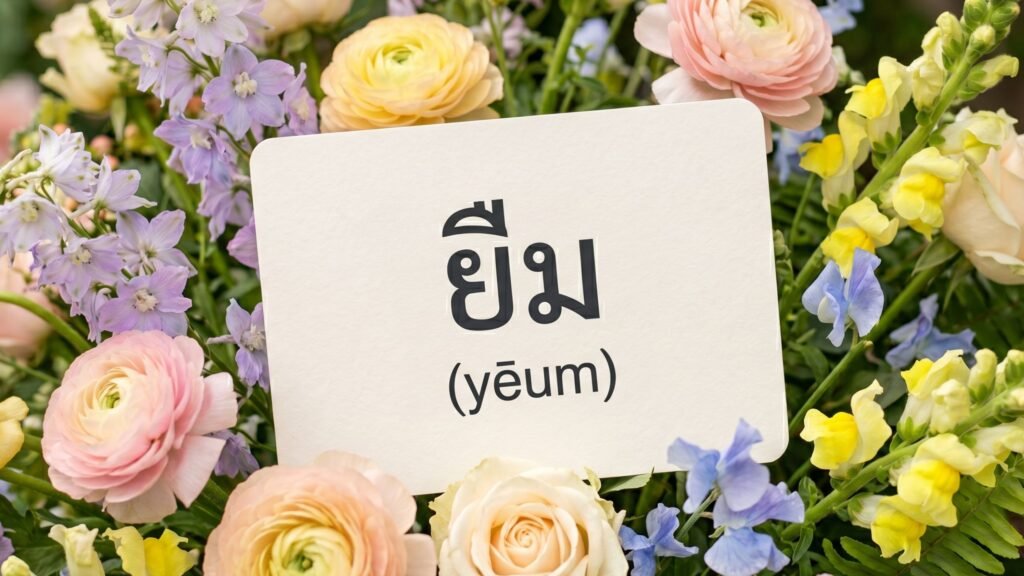
Daily Thai Confidence: Using ยืม (yēum)
In this Thai lesson, we learn how to use the verb ยืม (yēum), which means ‘to borrow’. It is used when someone takes something from another person with the intention of returning it later.
In this Thai lesson, we learn how to use the verb ยืม (yēum), which means ‘to borrow’. It is used when someone takes something from another person with the intention of returning it later.

There will be no Daily Thai Confidence posts this week. I’ve come down with a cold and cough, and I’m honestly not quite myself at the moment.

In this Thai lesson, we learn how to use the preposition of exception ยกเว้น (yók-wén), which means ‘except,’ ‘excluding,’ or ‘with the exception of’. It is used to exclude someone or something from a rule, group, or statement. It is placed before the person, thing, or circumstance that is excluded.

In this Thai lesson, we learn how to use the verb ตรวจ (dtrùad), which means ‘to check,’ ‘to inspect,’ ‘to examine,’ or ‘to verify’. It is used when someone looks carefully at something to make sure it is correct, safe, or in good condition.

Authorities say the stricter screening is partly a precaution connected to the current instability in the Middle East and the possibility that individuals linked to conflicts or criminal networks could attempt to enter the country posing as tourists.

In this Thai lesson, we learn how to use the preposition เกี่ยวกับ (gìew-gàb), which means ‘about,’ ‘regarding,’ ‘concerning,’ or ‘related to’. It is used to introduce the topic, subject, or matter that someone is talking, thinking, reading, or asking about.
Daily Thai Confidence: Using เกี่ยวกับ (gìew-gàb) Read More »

Thailand’s Ministry of Tourism and Sports is preparing a plan to provide financial assistance of up to 2,000 baht per day to foreign tourists who are stranded in the country because of these flight disruptions.

In this Thai lesson, we learn how to use the adverb มากมาย (mâak-māai), which means ‘a lot,’ ‘numerous,’ or ‘a great deal’. It is often used to modify a verb, adjective, or an entire phrase to emphasise a large amount or abundance.
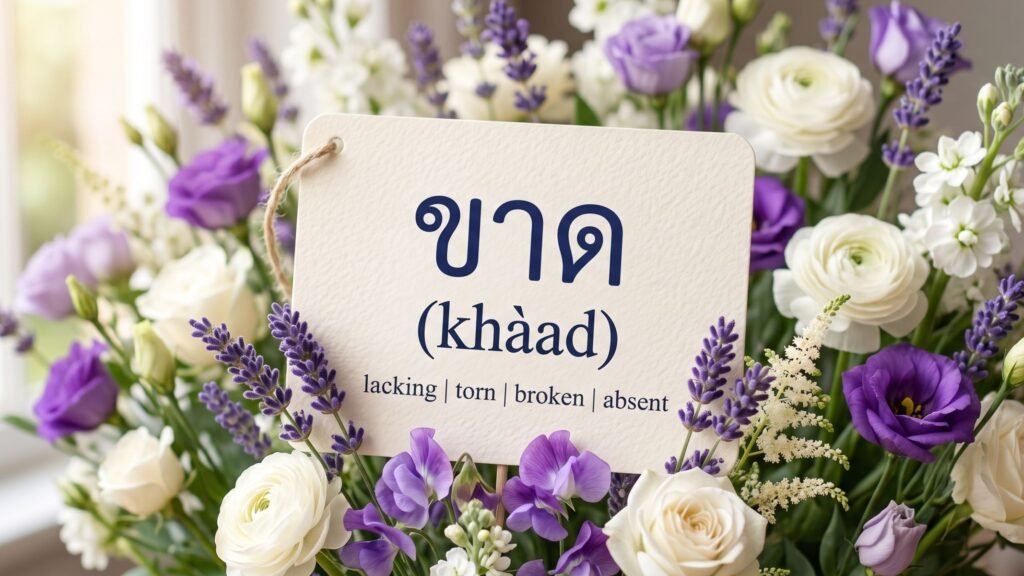
In this Thai lesson, we learn how to use the verb ขาด (khàad) can mean ‘to lack’ or ‘to not have enough’. It is commonly used when talking about experience, money, resources, or necessities.

In 2014, the Thai government introduced regulations that made the import of electronic cigarettes and vaping devices illegal. This means that bringing a vape into Thailand — even if it is just in your luggage for personal use — can technically be considered importing a prohibited item.
Vaping In Thailand Is Illegal, And Ignorance Isn’t A Defence Read More »

In this Thai lesson, we learn how to use the noun ประสบการณ์ (bprà-sòb-gāan), which means ‘experience’. It refers to knowledge, understanding, or skills that a person gains from things they have done, seen, or lived through in life.
Daily Thai Confidence: Using ประสบการณ์ (bprà-sòb-gāan) Read More »

Verb Phrase: มองโลกในแง่ดี (māwng lôok nāi ngâe dēe)Meaning: to be optimistic / to look on the bright side / to
Daily Thai Confidence: Using มองโลกในแง่ดี (māwng lôok nāi ngâe dēe) Read More »
