Adverb: แค่ (khâe)
Meaning: only / just / merely
In this Thai lesson, we learn how to use the adverb แค่ (khâe), which means ‘only,’ ‘just,’ or ‘merely’. It is used to emphasise limitation or smallness of quantity, amount, or degree. In Thai, the adverb แค่ (khâe) can appear before a noun, number, or verb phrase to show limitation or emphasis.
The typical structure usually follows the pattern: แค่ (khâe) + noun / number / verb phrase.
For examples (ตัวอย่างเช่น — dtūa-awyàang chên)
เขามาแค่คนเดียว
khǎo māa khâe khōn-dīew
Literal: He come only person-single one.
He came alone.
The adverb แค่ (khâe = only / just) is used here for emphasis, highlighting that only one person came. It modifies the noun phrase คนเดียว (khōn-dīew = alone / by oneself / only one person). Without แค่ (khâe), เขามาคนเดียว (khǎo māa khōn-dīew = he came alone) still makes perfect sense and grammatically correct, but adding แค่ (khâe) makes the meaning stronger and clearly shows that no other people came. Please note: The noun phrase คนเดียว (khōn-dīew = alone / by oneself / only one person) refers to one person with no one else. It is often used to show that an action is done alone or that there is only one person involved.
ฉันแค่ถามเฉยๆ
chǎn khâe thǎam chěuy-chěuy
Literal: I only ask that’s all.
I’m only asking.
The adverb แค่ (khâe = only / just) is used here to limit the action ถาม (thǎam = to ask), signally that the speaker is only asking and not doing anything more than that. The adverb phrase เฉยๆ (chěuy-chěuy = simply / casually / just / without any special feeling or intention) further used for emphasis to downplay the action and show that there is no special intention behind it. It shows that the question is asked casually, without pressure, seriousness, or hidden meaning. Please note: The adverb phrase เฉยๆ (chěuy-chěuy = simply / casually / just / without any special feeling or intention / to be indifferent) is often used to show neutrality. It tells the listener that something is done without strong emotion, seriousness, or deeper purpose, similar to saying ‘don’t overthinking it,’ ‘it’s nothing serious,’ ‘there’s no hidden meaning,’ ‘that’s all,’ or ‘nothing more’.
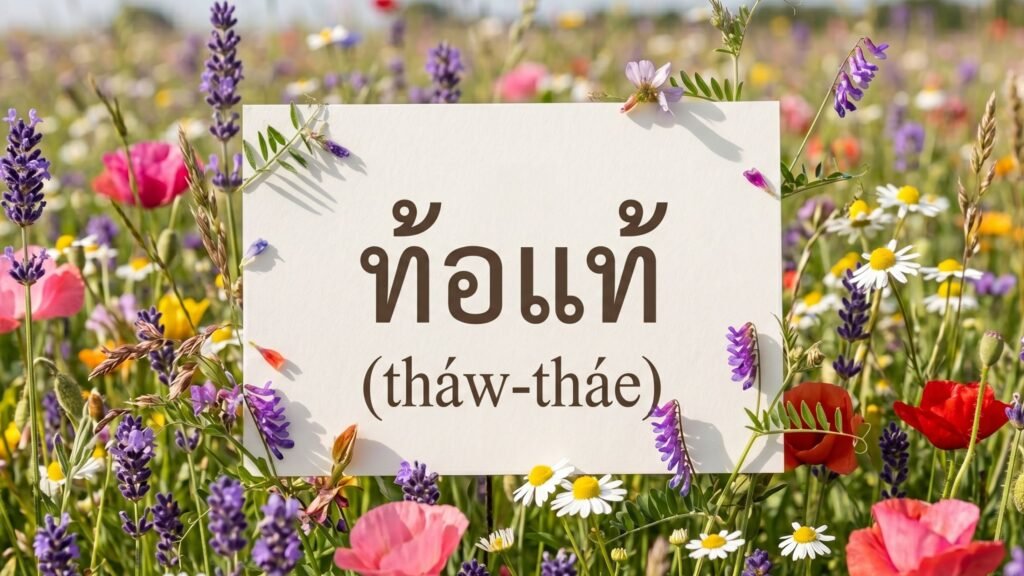
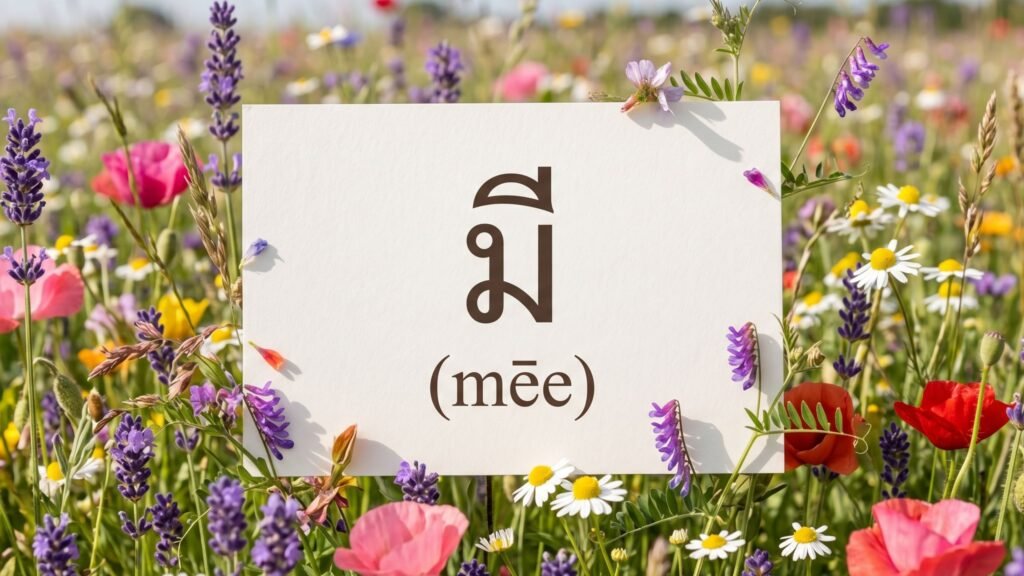
เธอมีเพื่อนแค่สองคนเท่านั้น
thēr mēe phêuan khâe sǎwng khōn thâo-nán
Literal: She has friend only two people equal to-that.
She has only two friends, that’s it.
The adverb แค่ (khâe = only / just) is used here for emphasis, highlighting that the number of friends is small. It modifies the adjective phrase สองคน (sǎwng khōn = two people). Without แค่ (khâe), เธอมีเพื่อนสองคน (thēr mēe phêuan sǎwng khōn = she has two friends) still makes perfect sense and grammatically correct, but adding แค่ (khâe) makes the meaning stronger and clearly shows the limitation in number. The adverb phrase เท่านั้น (thâo-nán = only that / just that / no more than that / that’s it) reinforce this idea of limitation and further emphasise that the number does not go beyond what is stated — in this case, only two friends, and no more. Please note: The adverb phrase เท่านั้น (thâo-nán = only that / just that / no more than that / that’s it) is used to emphasise limitation or restriction, showing that something does not go beyond what is stated. It is typically placed at the end of a phrase or clause to strongly reinforce the idea of ‘that’s all’. For example: เขามีเงินร้อยบาทเท่านั้น (khǎo mēe ngēuhn sǎwng-róy bàad thâo-nán = He has 200 baht, that’s all.); ฉันเป็นเพื่อนของเขาเท่านั้น (chǎn bpēn phêuan khǎwng-khǎo thâo-nán = I’m his friend, that’s all.). When แค่ (khâe) and เท่านั้น (thâo-nán) are used together — แค่ (khâe)….เท่านั้น (thâo-nán), they create strong emphasis on limitation, similar to saying ‘that’s it, no more than that’.
มันเป็นแค่ปัญหาเล็กน้อยเท่านั้น
mān bpēn khâe bpān-hǎa lék-nóy thâo-nán
Literal: It to be only problem small-little equal to-that.
It’s only a minor problem, that’s all.
The adverb แค่ (khâe = only / just) is used here for emphasis, to downplay the seriousness of the situation. It modifies the noun phrase ปัญหาเล็กน้อย (bpān-hǎa lék-nóy = a minor problem). Without แค่ (khâe), มันเป็นปัญหาเล็กน้อย (mān bpēn bpān-hǎa lék-nóy = it’s a minor problem) still makes perfect sense and grammatically correct, but adding แค่ (khâe) makes the meaning stronger and highlights that the problem is minor and limited. The adverb phrase เท่านั้น (thâo-nán = only that / just that / no more than that / that’s it) is placed at the end of the sentence to reinforce the limitation, adding a sense of ‘that’s all it is — nothing more serious than that’.
Homework (การบ้าน — gāan-bâan)
Practise putting your newly learned Thai word into a sentence by translating the following sentences below.
- We only have five minutes left.
- They just wanted to help.
- It’s only my opinion.
- He just stays home all day.
- I’m just looking, I don’t buy want to buy anything.
About Post Author